

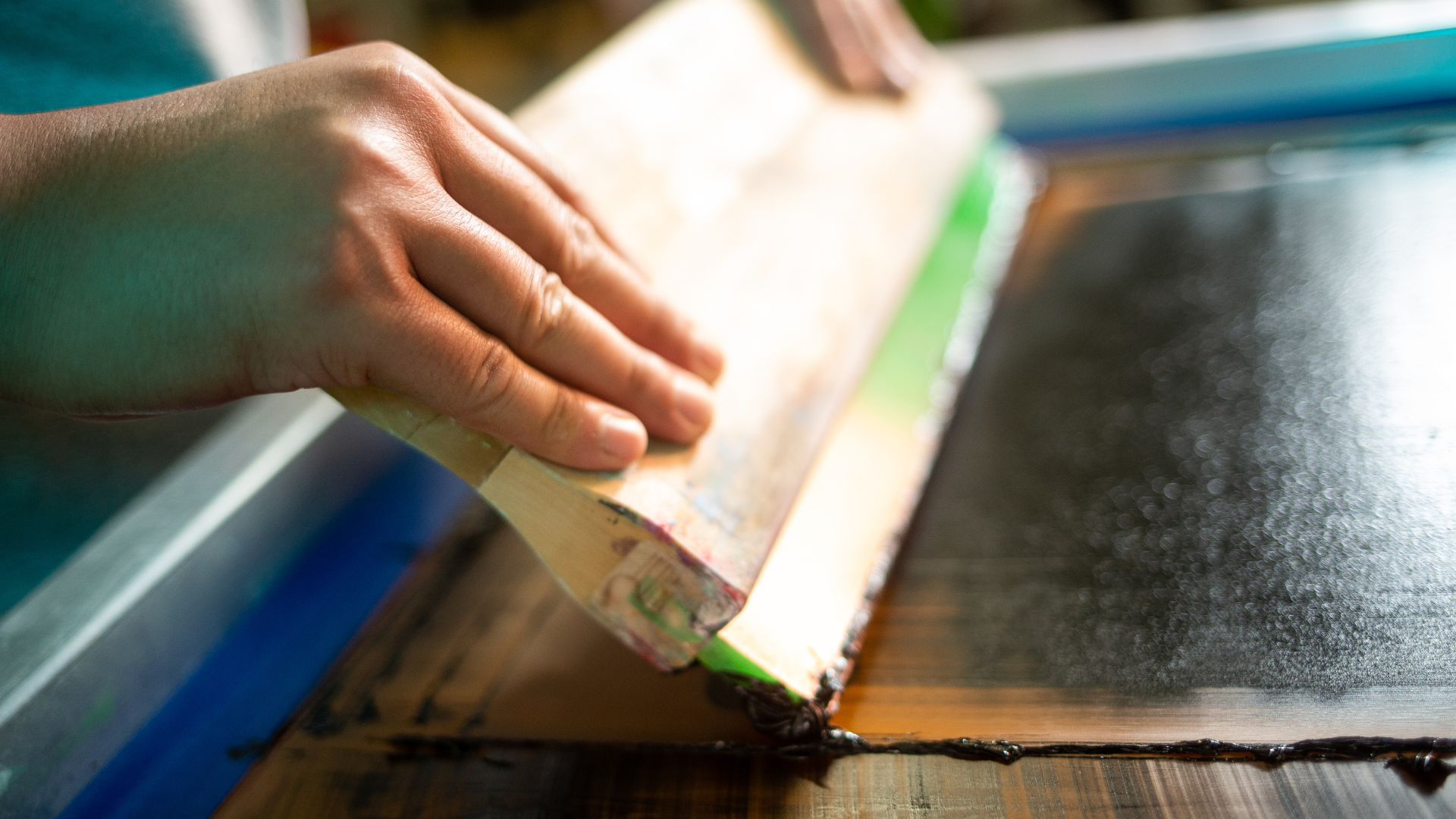
Screen printing is one of the few technologies that has remained fundamentally unchanged for over a thousand years, even as it evolved from an ancient artisanal craft into a multibillion-dollar global industry.
In 2026, we see a beautiful marriage of traditional “analog” squeegees and high-tech digital automation. But to understand where we are, we have to look back at how a simple mesh changed the world.
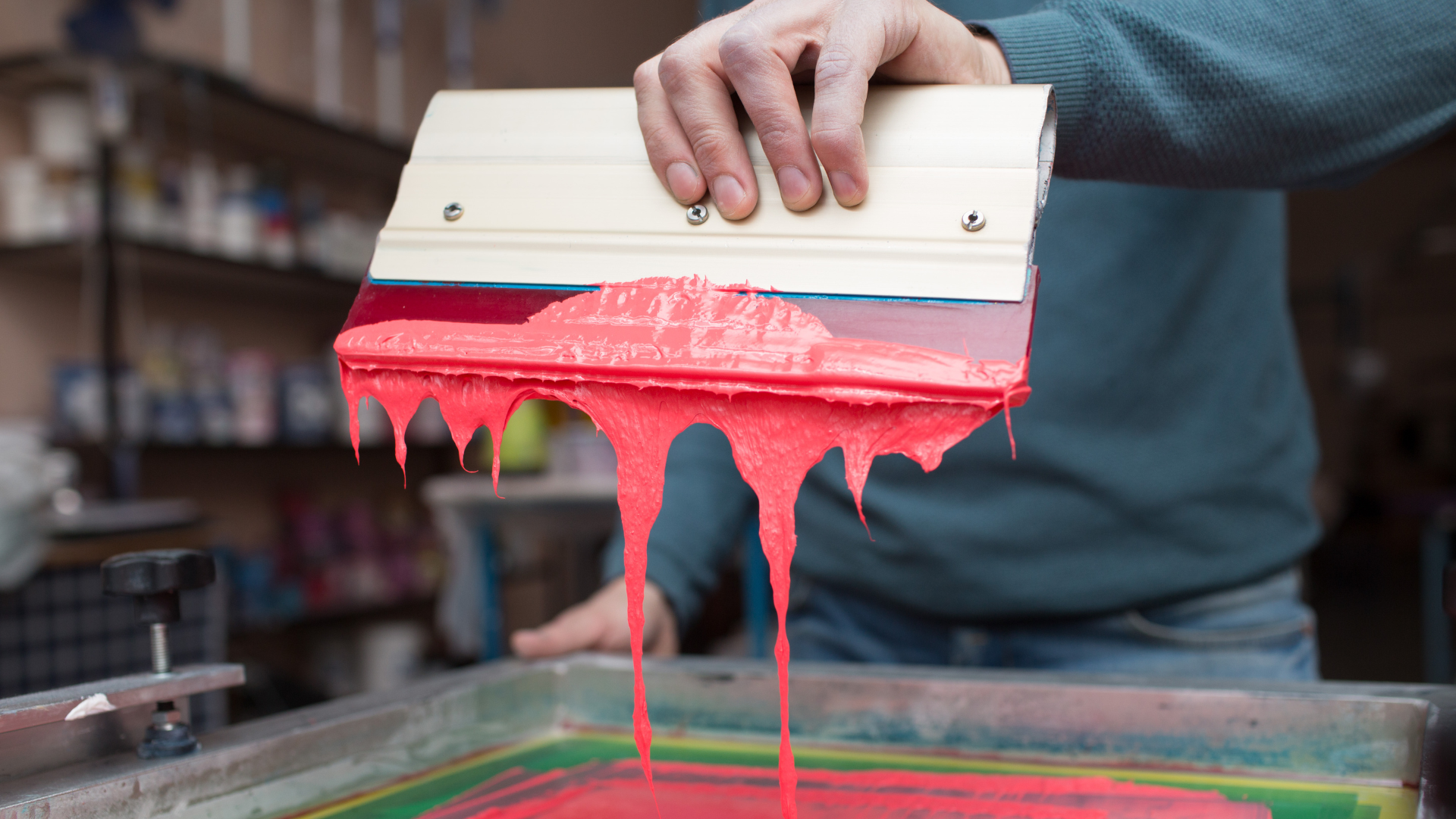
The Origins: Song Dynasty China (960–1279 AD)
While many think of screen printing as a modern invention, it actually dates back to the Song Dynasty in China.
-
Early Tech: Artisans used human hair stretched across wooden frames to create a fine mesh.
-
The Process: They applied stencils made of thin paper and used stiff brushes to push ink through the hair-mesh onto silk fabrics.
-
Evolution: The Japanese later improved this by using silk fibers instead of hair and developing complex “bridge” stencils to create intricate, floating designs.
The Western “Re-Discovery” (1907)
It took nearly a millennium for the process to make its way to Europe. In 1907, an Englishman named Samuel Simon was granted the first patent for screen printing.
-
The Patent: Simon used silk mesh (giving us the term “silk screening”) to print expensive wallpapers and high-end fabrics for the British elite.
-
The Secret Sauce: By 1910, printers began experimenting with photo-reactive chemicals. This was the “big bang” moment, allowing printers to create stencils using light rather than hand-cutting paper.
The 1960s: Pop Art and the Graphic Tee
Two major events in the 1960s moved screen printing from industrial basements into the cultural spotlight:
-
Andy Warhol: Warhol revolutionized the art world by using screen printing to create his iconic “Marilyn Monroe” and “Campbell’s Soup Cans” series. He loved the “mechanical” nature of the process, proving that art could be duplicated and still be masterpiece-level.
-
Michael Vasilantone: In 1960, Vasilantone invented the rotary screen printing press. Originally designed for printing logos on bowling uniforms, this machine allowed for multi-color designs to be printed quickly. This birthed the modern “Graphic T-shirt” industry.
Screen Printing in 2026: The Hybrid Era
Fast forward to today. While the basic concept of pushing ink through mesh remains, the technology surrounding it has leaped into the future.
-
DTS (Direct-to-Screen): We no longer use physical film or darkrooms. Digital lasers “burn” the image directly onto the coated screen with micron-level precision.
-
Hybrid Printing: The biggest trend in 2026 is the Hybrid Press. This combines a traditional screen printing carousel with a high-resolution digital print head. You get the thick, durable “feel” of screen printing ink with the infinite color detail of a digital photo.
-
Sustainability: Modern shops have swapped toxic plastisols for algae-based inks and water-based systems that are $100\%$ biodegradable.
Why Screen Printing Still Reigns Supreme
Even with the rise of Direct-to-Garment (DTG) and 3D printing, screen printing remains the king of the apparel world for three reasons:
-
Durability: The ink bond is chemically superior for long-term wear.
-
Vibrancy: It achieves a level of opacity on dark fabrics that digital printers still struggle to match.
-
Scalability: For large runs (50+ pieces), it remains the most cost-effective method in existence.
The Timeline at a Glance
| Era | Milestone |
| 960 AD | Originates in China using human-hair mesh. |
| 1907 | Samuel Simon patents “Silk Screening” in England. |
| 1930s | “Serigraphy” is coined to distinguish fine art from industrial printing. |
| 1962 | Andy Warhol brings the process to the mainstream art world. |
| 2026 | Hybrid and Algae-ink systems make the process eco-friendly and hyper-detailed. |
Do you prefer the vintage, “heavy” feel of a traditional screen print, or the smooth, photographic look of modern digital printing?
 GET A FAST QUOTE